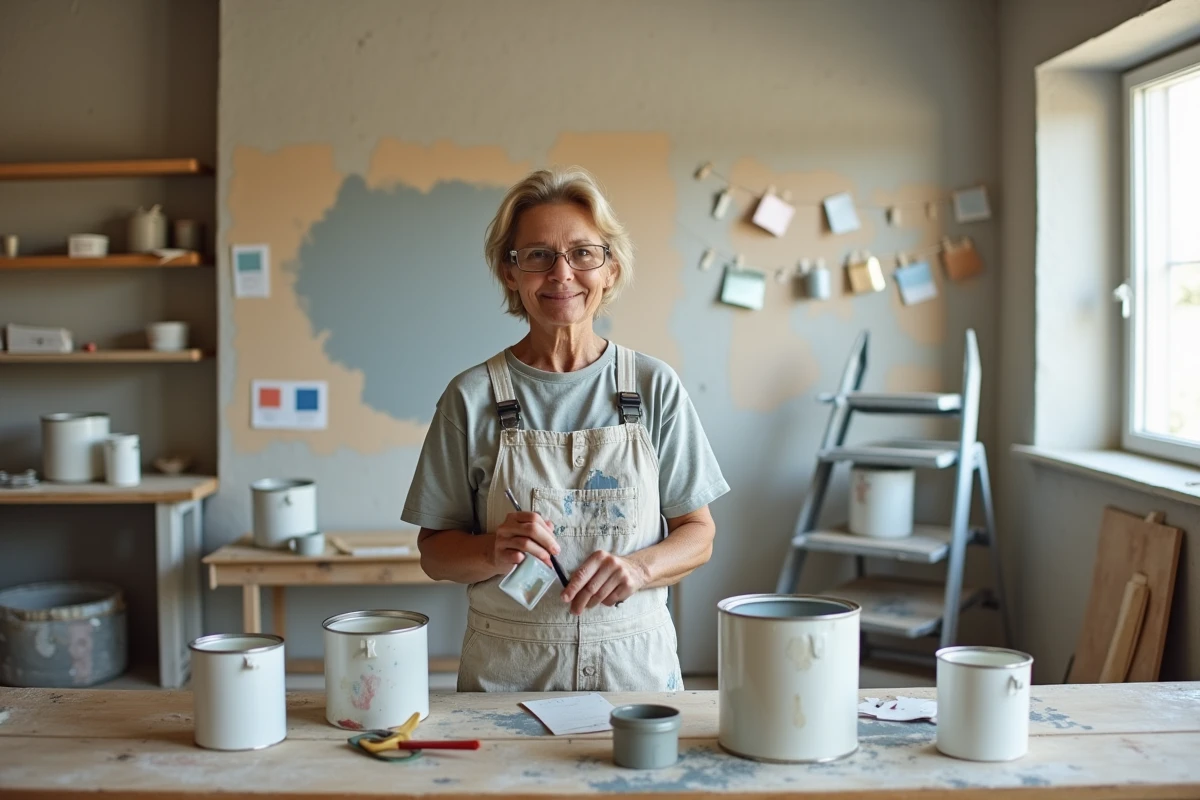
Diluting water-based paint is not just about pouring a glassful into the pot. The ratio depends on the substrate, the application tool, the initial viscosity of the product, and, less commonly mentioned, the hygrometric conditions of the site. Here, we detail five concrete techniques to master dilution without compromising coverage or the durability of the dry film.
1. Adjust the dilution ratio according to the site’s humidity and temperature
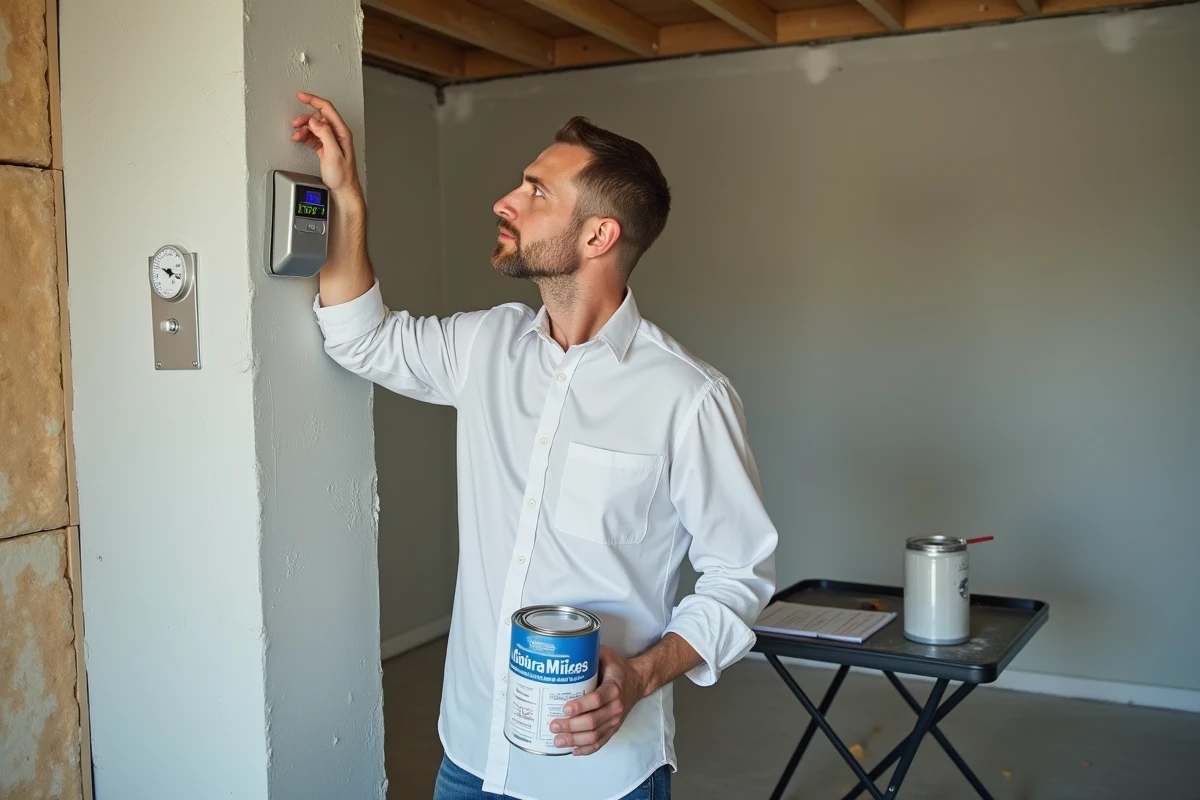
Beyond 80% relative humidity or when the temperature exceeds 30 °C, the drying of water-based paint slows down or, conversely, causes surface skinning that traps water in the film. Under these conditions, we recommend reducing the dilution by about one third compared to the ratio indicated on the pot.
In hot and dry weather, water evaporates from the mixture even before the roller touches the wall. The paint thickens in the tray, leaves marks, and loses its flow. Adding a small fraction of extra water (a few percent) compensates for this rapid evaporation, provided you work in small batches prepared as you go.
In cold and humid conditions (unheated site in winter), dilution should remain minimal to avoid runs on a film that takes too long to set. Checking the humidity with a simple digital hygrometer before opening the pot prevents most appearance defects on the finishing coat.
To delve deeper into the basic methods, a guide explains how to dilute water-based paint detailing the ratios by product type.
2. Use a graduated pipette to dose water to the nearest milliliter
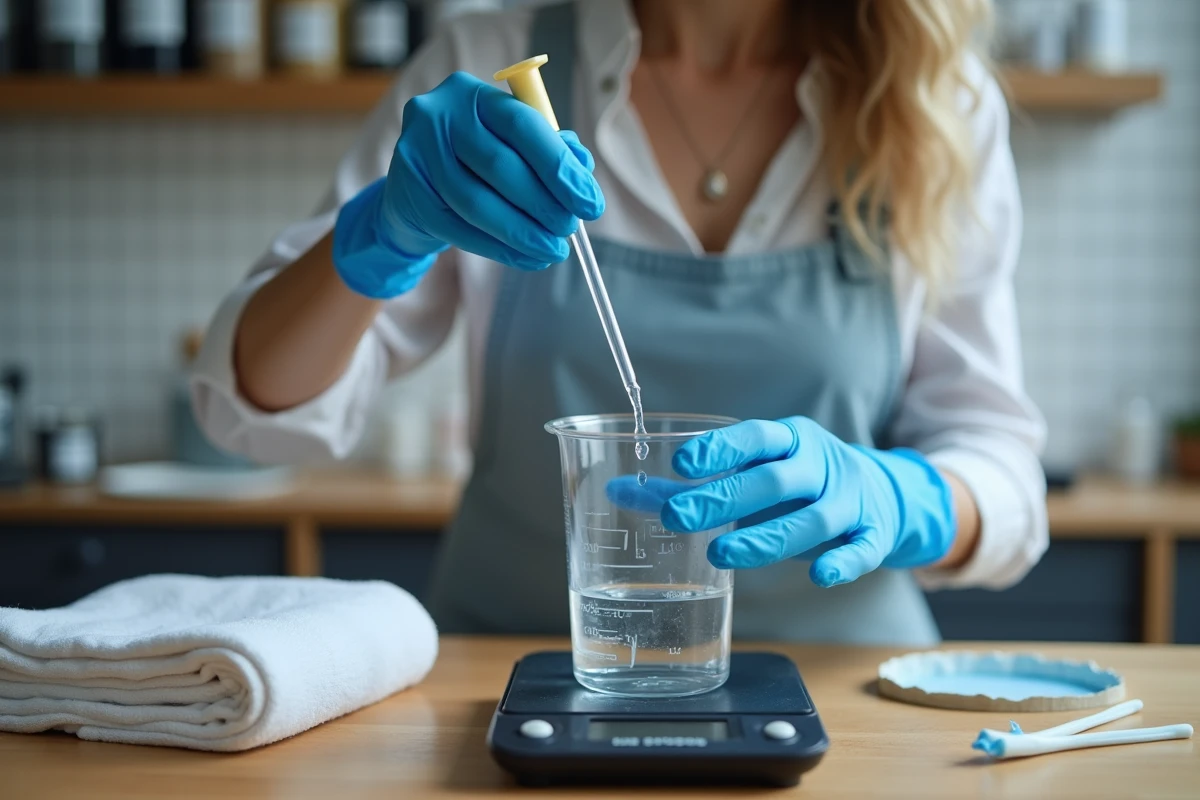
The classic gesture of the amateur painter, pouring a stream of water directly from the tap, generates a considerable margin of error. Professionals use graduated pipettes or kitchen syringes to inject water in increments of a few milliliters. This precision avoids over-dilution, the primary cause of paint running and poor coverage.
Dosing in increments of 2 to 3% of the total volume of paint allows you to test the viscosity between each addition. Mix, take a sample with a brush, observe the flow: if the paint runs off the brush in a continuous veil without dripping, the consistency is suitable for a roller. If it stays stuck, add another increment.
The French Building Federation notes that using digital graduated pipettes significantly reduces problems with lumps on damp interior sites. The investment is negligible compared to the cost of a failed coat that needs to be redone.
3. Test the viscosity with a flat brush before tackling the surface
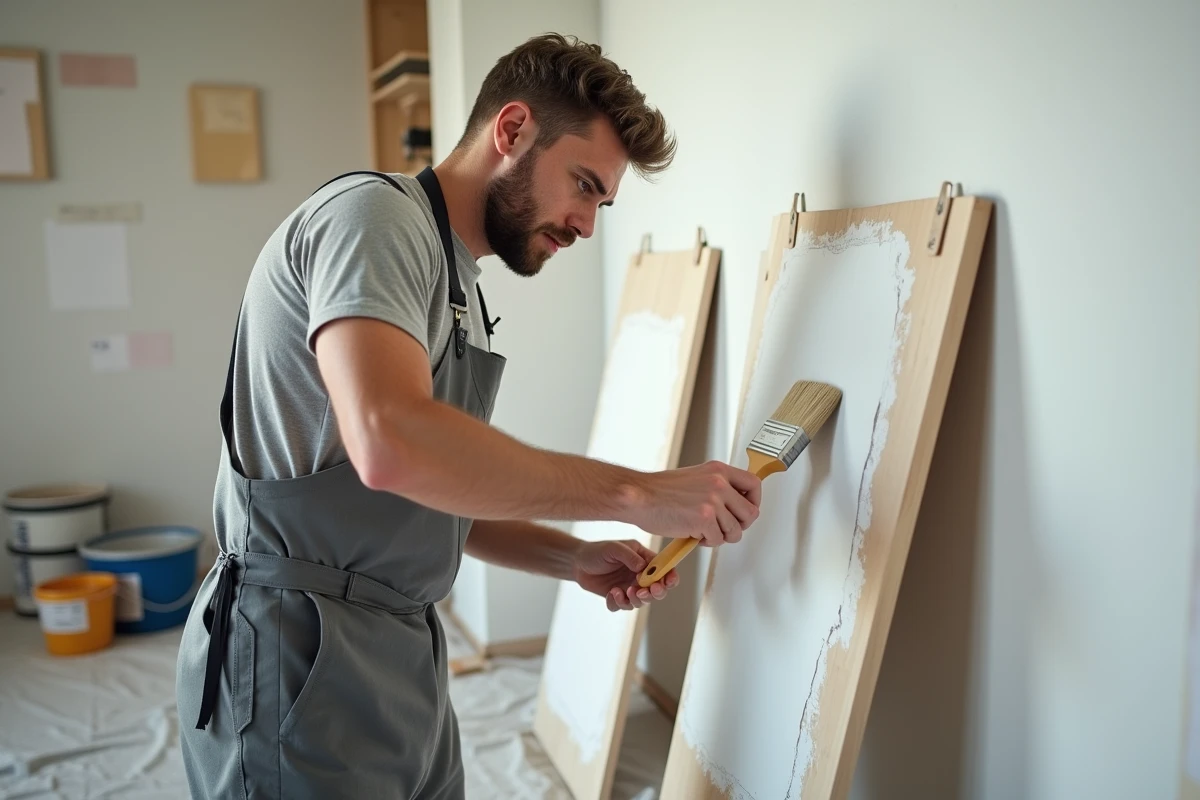
The technical sheet indicates a percentage of dilution, but this figure assumes standard temperature and humidity. A viscosity test with a 50 mm flat brush, performed on a white cardboard, remains the most reliable check before moving on to the wall.
Dip the brush one-third of the length of the bristles, remove it, and observe:
- The stream of paint breaks in less than two seconds: the dilution is correct for roller application on a smooth wall.
- The paint forms a thick puddle that does not flow: it lacks water, add an increment.
- The stream is watery and transparent: the dilution is excessive, add raw paint to thicken the mixture.
This test takes less than a minute and avoids the need to sand and redo an entire coat. On a site where the paint has sat for several hours in the tray, redo it systematically before resuming work.
4. Mix with a low-speed mechanical whisk to avoid air bubbles
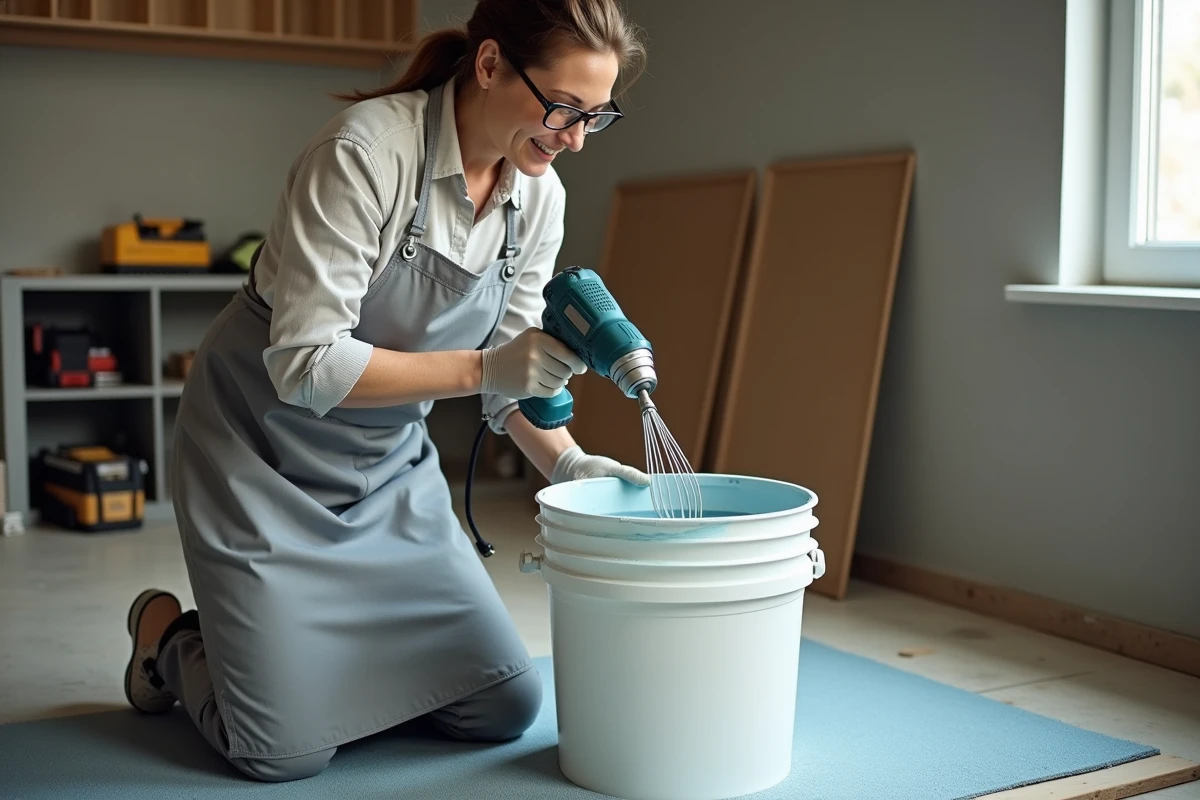
Stirring diluted paint with a flat stick works for a small pot. Once the volume exceeds two or three liters, manual mixing leaves pockets of water at the bottom of the bucket, creating areas of uneven concentration. A low-speed helical whisk mounted on a drill (less than 400 revolutions per minute) homogenizes the mixture without incorporating air.
Air bubbles trapped in the paint burst during drying and leave micro-craters in the dry film. This defect, often attributed to the roller, usually stems from mixing too quickly. Keeping the rotation speed below 400 rpm eliminates this risk.
First pour the water into the bucket, then gradually add the paint while mixing. This sequence, the opposite of the usual practice, limits the formation of lumps at the bottom of the container and produces a homogeneous mixture more quickly.
5. Adapt the dilution rate to the substrate and the layer concerned
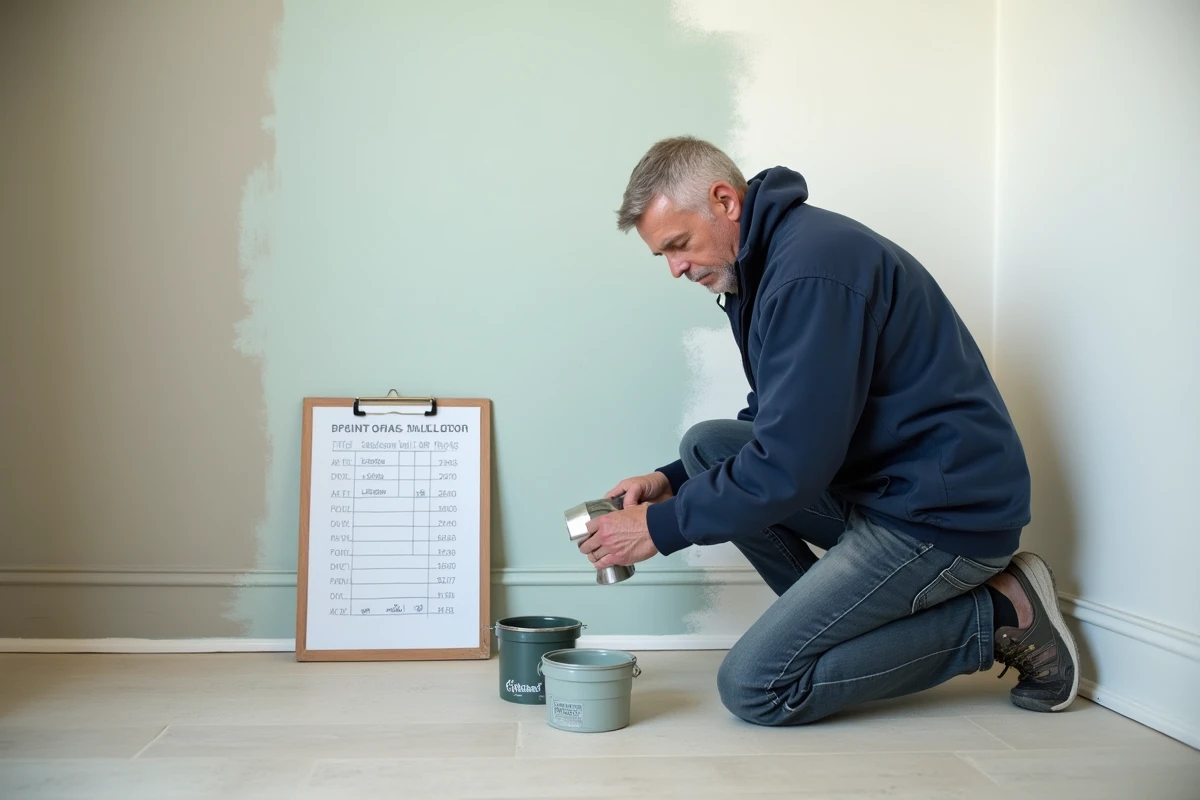
A new plaster, a previously painted wall, and raw wood do not absorb water in the same way. The primer coat is diluted more than the finishing coat, as its role is to penetrate the substrate to block porosity, not to cover.
- On new plaster or fresh coating: the first coat can receive a stronger dilution (the manufacturer usually indicates the ratio on the label). The second coat is applied pure or very lightly diluted.
- On a previously painted wall in good condition: a light dilution is sufficient for the first coat. The second is applied without dilution.
- On raw wood: the dilution of the first coat should be moderate to avoid saturating the fibers and raising the grain.
Since January 2026, European regulations require manufacturers to specify the exact dilution ratios for water-based paints on the packaging. Consulting these indications before starting has never been easier.
The quality of the final film depends as much on the dosage as on the application technique. Each surface and each paint form a technical couple that requires prior testing, not a universal recipe to apply blindly.