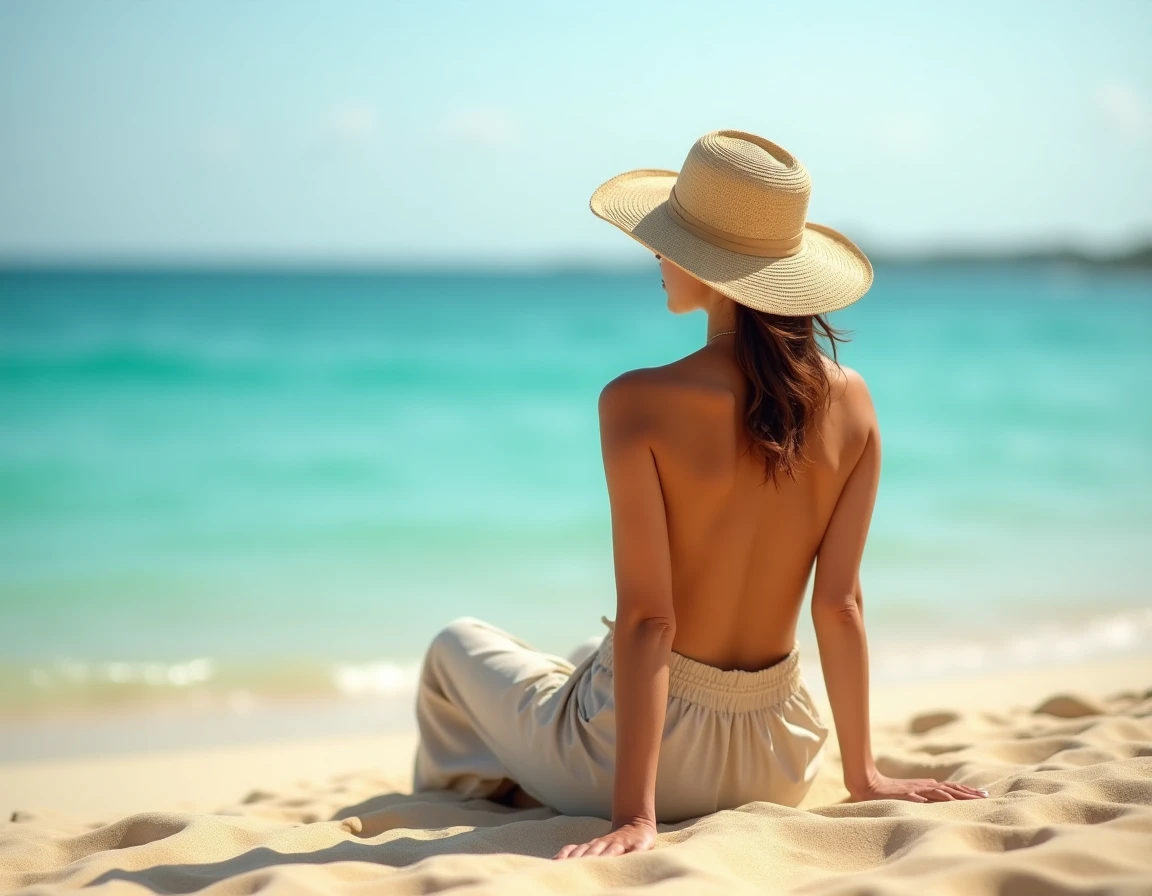
Topless refers to the act of removing the top of one’s swimsuit to expose the chest, typically on a beach or by a body of water. This practice, once common on French coasts, has seen a marked decline in recent years, driven by social pressure, fear of harassment, and a local tolerance that varies significantly from one beach to another.
Legal framework for topless in France: what local regulations change
In France, no national law explicitly prohibits topless on public beaches. A bare chest is not considered exhibitionism under the Penal Code, which targets sexual acts imposed on others.
The difficulty lies elsewhere. Rules vary from one municipality to another, and sometimes from one beach to another within the same resort. A municipal decree may restrict the practice in certain areas, particularly family beaches or private concessions. This local heterogeneity creates a gray area that most women discover on-site, without prior information.
Before removing the top, checking the regulations displayed at the beach entrance remains the most reliable reflex. Private beaches often enforce their own rules, which may be more restrictive than those of the municipality. On designated naturist beaches, topless is accepted within a framework acknowledged by all users, eliminating ambiguity. Those seeking tips for going topless at the beach will find useful guidelines to anticipate these situations.

Sun protection and topless: an underestimated dermatological issue
The chest is one of the areas of the body typically covered by clothing or a swimsuit. The skin there is thinner, less accustomed to UV rays, and therefore more vulnerable to sunburn. Removing the top directly exposes the nipples and décolletage to radiation they are not used to.
Applying a high SPF sunscreen to the entire exposed area, including the areolas, is a preventive measure that should not be overlooked. Reapplying every two hours (and after each swim) is even more crucial than on the arms or legs, precisely because this skin has not developed a solar capital over the season.
Concrete precautions to limit risks
- Apply sunscreen at least twenty minutes before exposure, in a thick enough layer on the chest and upper abdomen
- Avoid exposure during the hours when radiation is most intense, usually between noon and four PM
- Keep a sarong or t-shirt handy to cover the chest at the first signs of redness
- Moisturize the skin in the evening with an after-sun care product to limit dryness
Topless transforms a question of clothing freedom into a topic of dermatological prevention. Protecting an area usually covered requires more rigor than a simple routine gesture.
Swimsuit as a tool for transitioning to topless
The choice of swimsuit can facilitate the transition to occasional toplessness. Recent content presents the swimsuit not just as a simple aesthetic accessory, but as a transition strategy for women who hesitate.
A bikini top with a single tie at the back or a front knot can be removed and put back on in seconds. This type of model allows for hybrid use: chest exposed while tanning, quick coverage in case of a passing vendor, a group, or simply a change of mind.
Strapless tops offer the same advantage. They slide down without needing to detach anything and can be pulled back up just as quickly. This mechanical ease reduces the feeling of a definitive gesture and allows for testing toplessness in stages, first for a few minutes, then longer if comfort sets in.

Social pressure and perception on beaches: what concretely holds back
The primary barrier to toplessness is neither the sun nor the law. The gaze of others remains the main reason why most women keep their tops on. This gaze takes various forms, from whispered comments to a phone brandished for an unsolicited photo.
Online testimonials describe situations where women, after removing their tops, were photographed without their knowledge or heard inappropriate remarks. These experiences create a lasting deterrent effect, even among those who have never directly experienced the situation.
Reducing exposure to discomfort
Some practical choices can help limit the feeling of vulnerability:
- Prefer less crowded beaches or coves where the density of bathers is low
- Set up away from pathways and children’s play areas, where gazes naturally converge
- Practice toplessness accompanied, at least the first few times, to share the experience and feel less isolated
The choice of beach weighs as heavily as the decision itself. A calm cove on the Atlantic coast and a crowded waterfront on the Mediterranean do not produce the same experience at all.
The decline of toplessness in France reflects less a disinterest among women than a social context where the pressure of gaze and the risk of harassment weigh more heavily than twenty years ago. The legal framework allows the practice almost everywhere, but the social framework remains to be conquered beach by beach.