The ISPM 15 mark stamped on a pallet indicates the phytosanitary treatment it received for international transport. It says nothing about what the pallet carried. Before cutting a single board to make an outdoor pallet sofa, sorting the materials takes priority over the assembly plan.
ISPM 15 marking and sorting wooden pallets for outdoor furniture
ISPM 15 is designed to prevent the spread of pests in wood packaging used in international trade. It requires heat treatment (HT marking) or, less commonly, methyl bromide fumigation (MB, which should absolutely be avoided for furniture use). This standard does not certify that a pallet is free from chemical residues left by its previous cargo.
In practice, an HT-marked pallet may have been used to transport pesticides or industrial solvents. Always reject pallets with greasy stains, a chemical smell or signs of mould. Returnable pallets (EUR/EPAL marking) generally offer denser, more consistently sized wood, but their logistics history remains unclear.
We recommend choosing pallets from local sources (garden centres, agricultural cooperatives) where you can check their usage history. A pallet that has carried bags of potting soil or terracotta pots poses a far lower health risk than one from a chemical warehouse.
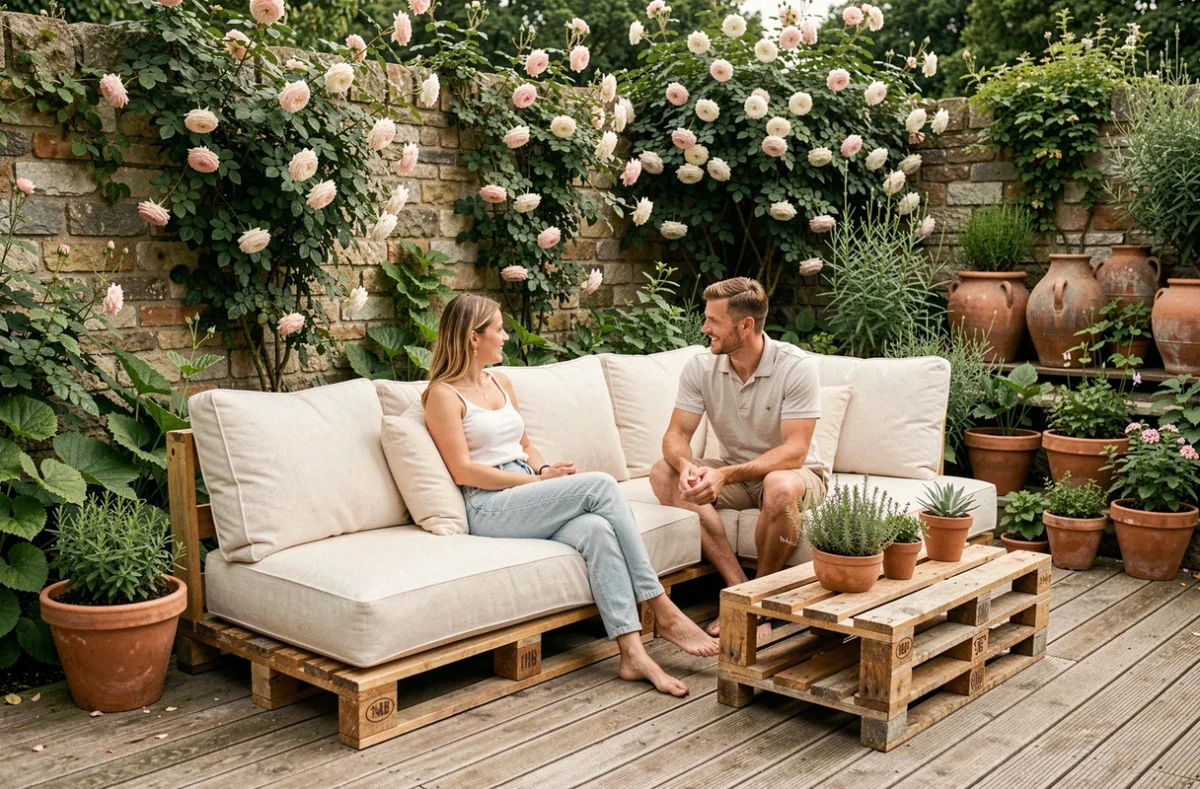
Building an outdoor pallet sofa for the garden requires this preliminary selection process; otherwise, even the finest finish won’t make a difference.
How the dimensions of a Euro pallet affect your sofa design
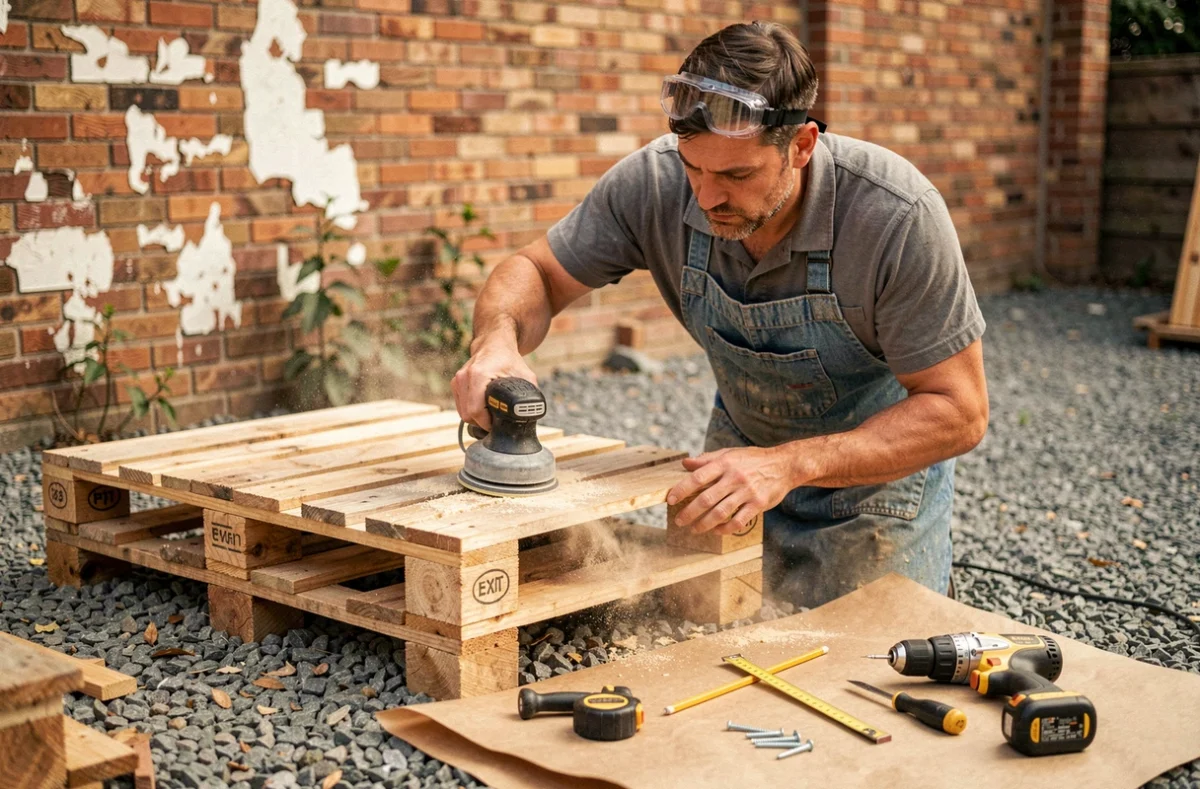
A standard Euro pallet measures 1200 x 800 mm. This is more than just a purchasing reference—it is the main design constraint. A two-seater sofa requires at least two pallets stacked to form the seat and one pallet positioned upright for the backrest.
Seat and height from the ground
Stacking two pallets gives a seat height of around 28 to 30 cm, lower than that of a conventional sofa. For extended use, adding feet or a third layer of battens raises the seat and makes it easier to sweep underneath. This ergonomic detail makes a significant difference to comfort on a patio used every day.
Pallet backrest: angle and fastening
A perfectly upright backrest (90°) can tire your back in less than half an hour. Tilting the backrest pallet back by a few degrees improves lumbar support. The most reliable method is to cut two triangular braces from pallet offcuts and screw them between the seat and backrest to hold the angle in place. Metal brackets alone are not enough to support the weight of an adult leaning back.
Armrests, often presented as optional in tutorials, stiffen the sides of the frame and prevent the backrest from tipping over. Even simple ones (half a pallet cut across its width) provide useful structural bracing.
Drying, sanding and protecting reclaimed wood for outdoor use
Reclaimed pallet wood almost always has too much moisture to be finished straight away. Applying stain or oil to damp wood compromises adhesion and traps residual moisture, accelerating rot. The wood must be completely dry before applying any protective finish.
After cleaning with water (using a stiff brush and, if needed, black soap), leave the dismantled pallets to dry upright for several days in a well-ventilated place. Sand the wood once it is dry.
- 80-grit sandpaper to remove splinters and wear marks, paying particular attention to the edges where hands naturally rest
- 120-grit sandpaper to smooth the seat and backrest surfaces, which come into direct contact with skin and cushions
- 180-grit sandpaper (optional) for a smoother finish if you plan to paint or apply tinted stain, as bare wood absorbs pigments unevenly
For protection, outdoor wood oil (linseed or tung) penetrates the fibres better than a film-forming varnish, which eventually flakes under UV exposure. Apply at least two coats, lightly sanding with 180-grit paper between coats.
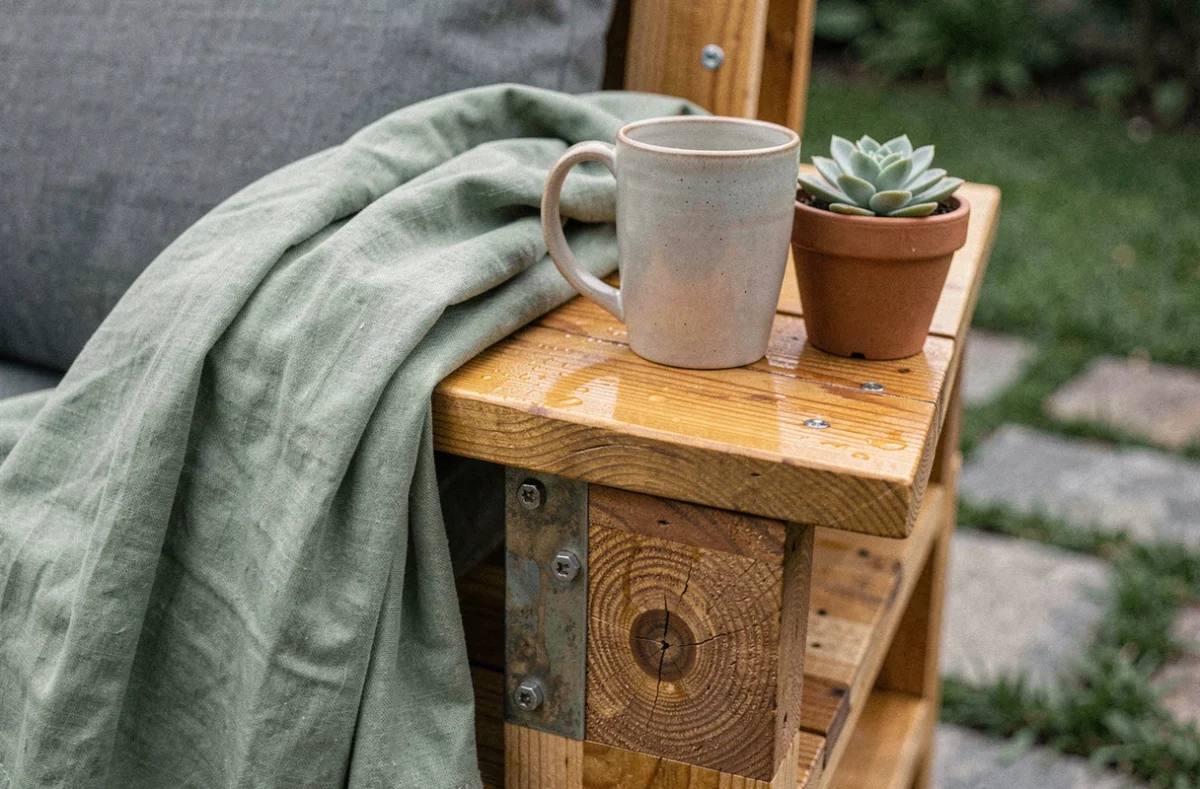
Cushions and upholstery for a durable outdoor pallet sofa
More than half the comfort of a pallet sofa comes from its cushions. Indoor foam used outdoors absorbs moisture, grows mould and sags within a season. Open-cell foam designed for outdoor furniture drains water and dries within a few hours after a shower.
Covers should be made from water-repellent, UV-resistant fabric (coated polyester or solution-dyed acrylic such as Sunbrella). Zippers make washing easier, but check that they are plastic or stainless steel to prevent corrosion.
- Seat cushion thickness: use at least 10 cm of high-resilience foam to compensate for the hard boards
- Back cushions: softer and thinner than the seat cushion, they should follow the angle of the backrest without slipping
- Fastening: fabric ties sewn onto the cushions and tied to the pallet crossbars prevent them from slipping, especially on a tilted backrest
Seasonal care for a garden pallet sofa
At the start of the season, brushing the wood with a soft brush and applying a fresh coat of oil to exposed areas will extend its lifespan. Store the cushions in a waterproof storage box or indoors whenever the sofa is no longer in regular use. Leaving cushions outside all winter, even under a cover, is the leading cause of premature deterioration.
The 1200 x 800 mm dimensions of a Euro pallet also make it possible to build matching footstools or a coffee table from the remaining pallets. Together, they create a coordinated garden seating set, provided you apply the same finish to every piece to ensure the wood ages evenly.